


2 July 2026 — 4 July 2026
Transactional Analysis
Transactional Analysis in Psychotherapy TA-202
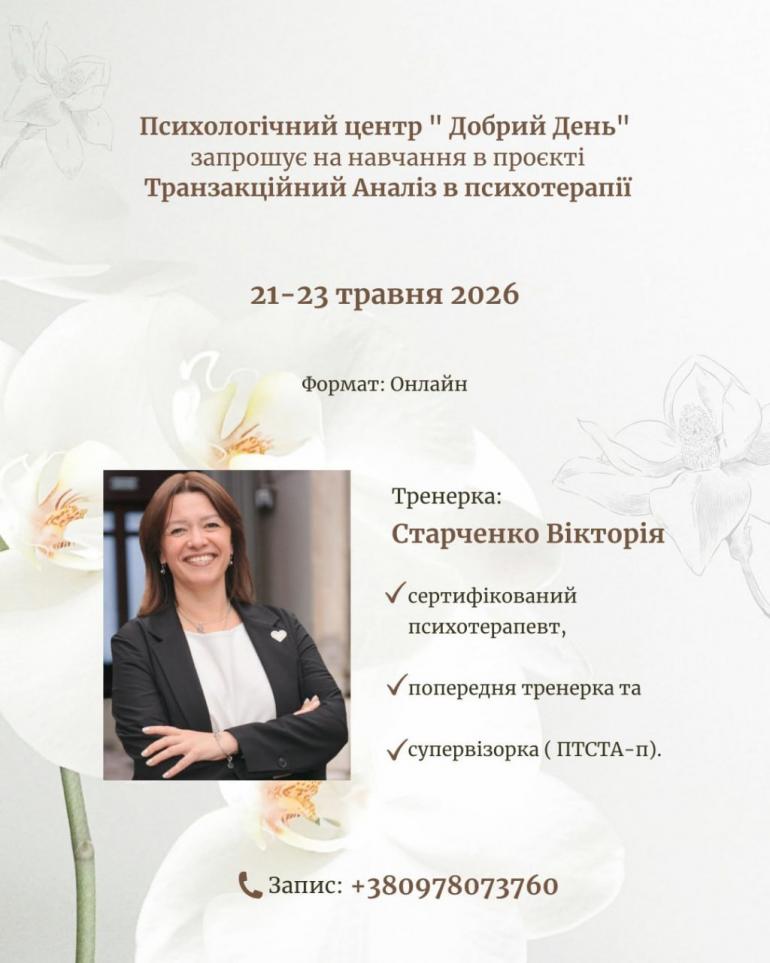
Transactional Analysis is a structured psychotherapeutic approach that helps to gain a deeper understanding of the client, their ego states, life script, psychological games, transactions, therapeutic contract, and the dynamics of professional contact.
Transactional Analysis is recognized by the Ministry of Health of Ukraine as a method with proven effectiveness. Therefore, training in this field is highly relevant in the context of modern requirements for psychotherapist professional development.
The program is designed to develop professional competencies that meet the standards for psychotherapists: theoretical preparation, practical work, professional ethics, supervisory thinking, analysis of client material, and structuring the therapeutic process accordingly.
The program emphasizes practical experience through:
- Analysis of client requests;
- Examination of clinical and consultative situations;
- Practical exercises;
- Discussion of psychotherapy session protocols;
- Professional reflection;
- Gradual integration of theory into personal practice.
Participants will gain:
- A structured learning approach;
- A deep understanding of the foundations of Transactional Analysis;
- Extensive practice and professional reflection;
- Analysis of clinical and consultative cases;
- Opportunities for further professional development in the TA method.
Transactional Analysis is recognized by the Ministry of Health of Ukraine as a method with proven effectiveness. Therefore, training in this field is highly relevant in the context of modern requirements for psychotherapist professional development.
The program is designed to develop professional competencies that meet the standards for psychotherapists: theoretical preparation, practical work, professional ethics, supervisory thinking, analysis of client material, and structuring the therapeutic process accordingly.
The program emphasizes practical experience through:
- Analysis of client requests;
- Examination of clinical and consultative situations;
- Practical exercises;
- Discussion of psychotherapy session protocols;
- Professional reflection;
- Gradual integration of theory into personal practice.
Participants will gain:
- A structured learning approach;
- A deep understanding of the foundations of Transactional Analysis;
- Extensive practice and professional reflection;
- Analysis of clinical and consultative cases;
- Opportunities for further professional development in the TA method.